
Critical Alerts Engine
The Critical Alerts Engine coordinates and secures the bank’s most sensitive communications. Designed exclusively for the financial sector, it ensures the immediate and secure delivery of notifications that cannot tolerate delays, such as OTPs, fraud alerts, or regulatory notices. It also provides full traceability of each message throughout its lifecycle and ensures compliance with regulatory requirements.
Trusted by Banks






Critical Alerts Engine
Guaranteed delivery for critical alerts
Our engine ensures the delivery of every critical notification. It acts intelligently so that each message reaches the customer through the most effective route, eliminating failures and third-party dependencies. The customer receives the information they need, while the bank operates with full control, security, and compliance.
-
1
Dedicated route for urgent alerts
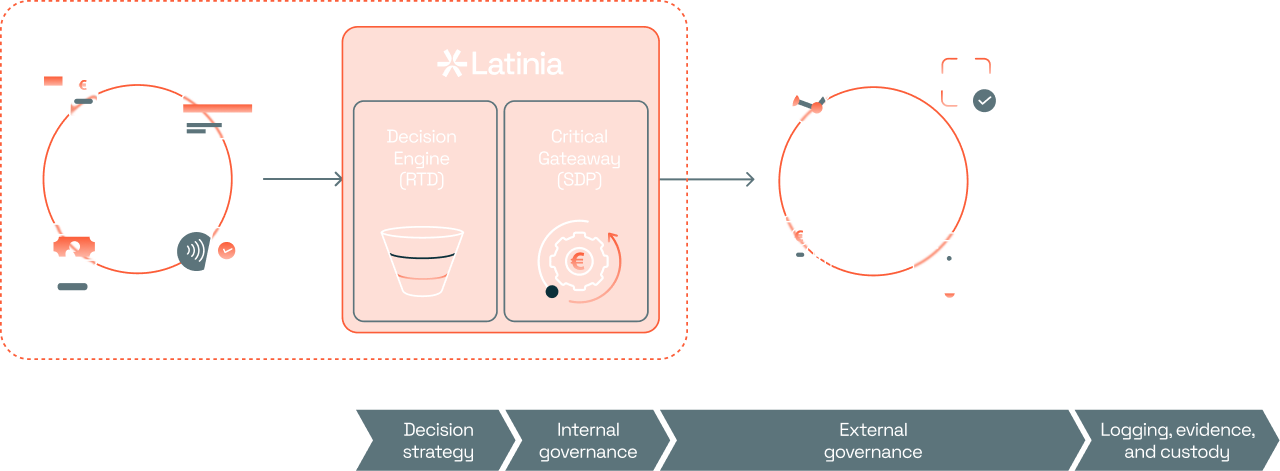
Critical alerts travel through an isolated infrastructure, ensuring they arrive on time without competing with commercial traffic.
-
2
Guaranteed delivery
Each message is delivered through the best available route, giving the bank full flexibility to manage its channels and providers.
-
3
Full control and traceability
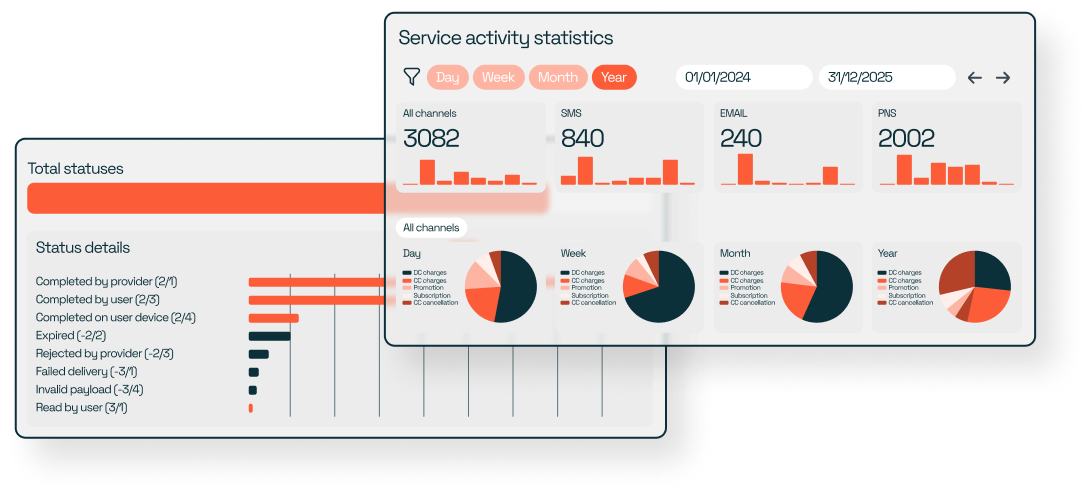
Banks have clear, auditable evidence of every notification, with visibility into when it was sent, delivered, and read by the customer.
-
4
Cost optimization
The system prioritizes digital channels (Push) and uses paid channels (SMS) only when strictly necessary.
Secure the alerts, secure the trust

Multi-channel and multi-provider

Traceability and legal evidence

Cost optimization
Trusted by

Carlos Marcuello
CIO
“A positive service experience is at the core of the relationship we are building with our customers. Every touchpoint with them is some sort of moment of truth, so each and every message we send is of capital importance Being accurate in these communications will help us to strengthen the relationship with our clients, as well as to develop a positive service experience that becomes a competitive advantage for the bank”

Carlos Vides
Digital Banking Manager
“Banco Industrial is an innovation-driven institution, with its customers being the cornerstone of the business. We have chosen Latinia’s solution to ensure that our communication with them is both the most efficient and effective”

Claudio Góchez
Channel Strategy Manager
“At Banco Agrícola we keep innovating for our clients, so we are very excited to work side by side with Latinia, a global leader in its product category, with whom we will refocus our multichannel notification strategy”

Guillermo Güemez
Deputy General Manager of innovation
“Latinia’s solution is strategically aligned with our bank’s current and future needs, both in terms of technology and business. We’re living in a world where more contact points demand more convenience on the customer side, as much as a greater complexity to be managed by the bank. We believe that Latinia will help us thriving with that goal”

Jaime González
Chief Information Officer
Thanks to LATINIA’s LIMSP©, we are able to real-time alert our users when their transactions take place, providing a greater security environment to all of us

Kyra Arcia
Head of Marketing and Innovation
The evolutionary roadmap of the bank determined that it was necessary to bet on a platform that integrates the 360º view of the customer in terms of their relationship with the bank. The functionality that Latinia offered us fit perfectly with the bank’s digital transformation roadmap

Celia Alonso
Multichannel Banking Director
Getting to the point: a a nearby bank is one that offers its customers the right channel at the right time That’s why mobile banking and more especially banking based on notifications are nowadays a must for Banco Popular, so what a better partner than LATINIA?

Valentin Echeverry
Vice President of Technology and Operations
For our financial notifications strategy we needed a product to grow with us; scalable, robust, highly specialized, and what’s more, with the ability to adapt and reuse our current business logic layer. We wanted a partner, not just a vendor, and there it was LATINIA

Martín Cabrera
Chief Technical Officer at Banco de Crédito e Inversiones
LATINIA’s infrastructure products , are robust, flexible and scalable to the core, and perfectly fit to our new Omnichannel architecture; that’s what we where exactly looking for.
Frequently Asked Questions (FAQs)
How does Latinia ensure the delivery of critical alerts such as OTPs, fraud notifications, and legal notices?
Latinia includes prioritization and routing mechanisms that ensure critical alerts reach the customer even if a channel or provider fails.
If a provider is unable to deliver the notification, the system automatically redirects it to another available channel — such as SMS — ensuring service continuity.
What types of alerts are considered “critical”?
Critical alerts are those essential for security and operational integrity, such as:
- Verification codes (OTPs)
- Fraud alerts or suspicious activity notifications
- High-value transaction confirmations
- Legal, regulatory, or compliance notices
- Security alerts (such as logins from new devices or password changes)
What happens if a channel provider experiences an outage?
Latinia activates failover and channel routing mechanisms. If a provider fails to deliver the notification, it is immediately redirected to another available provider or channel according to the resilience rules defined by the bank.
This ensures continuous real-time notification services and the delivery of critical alerts even during external incidents.
How does Latinia prioritize critical alerts during high-traffic periods?
Latinia provides a Service Line model that allows banks to isolate specific real-time notification services and assign them dedicated processing capacity.
This ensures that critical services do not compete with other communication flows, maintaining performance even during peak activity and operating with greater stability and autonomy.
What is a Latinia Service Line?
A Service Line is a model that allows financial institutions to separate and isolate notification services based on their level of criticality, providing an additional layer of resilience and protection in demanding operational scenarios.
Contact
Tell us about your challenge