How long does a bank have to fix a security flaw before someone exploits it? According to the Bank for International Settlements (BIS), AI has shrunk that window from weeks to minutes.
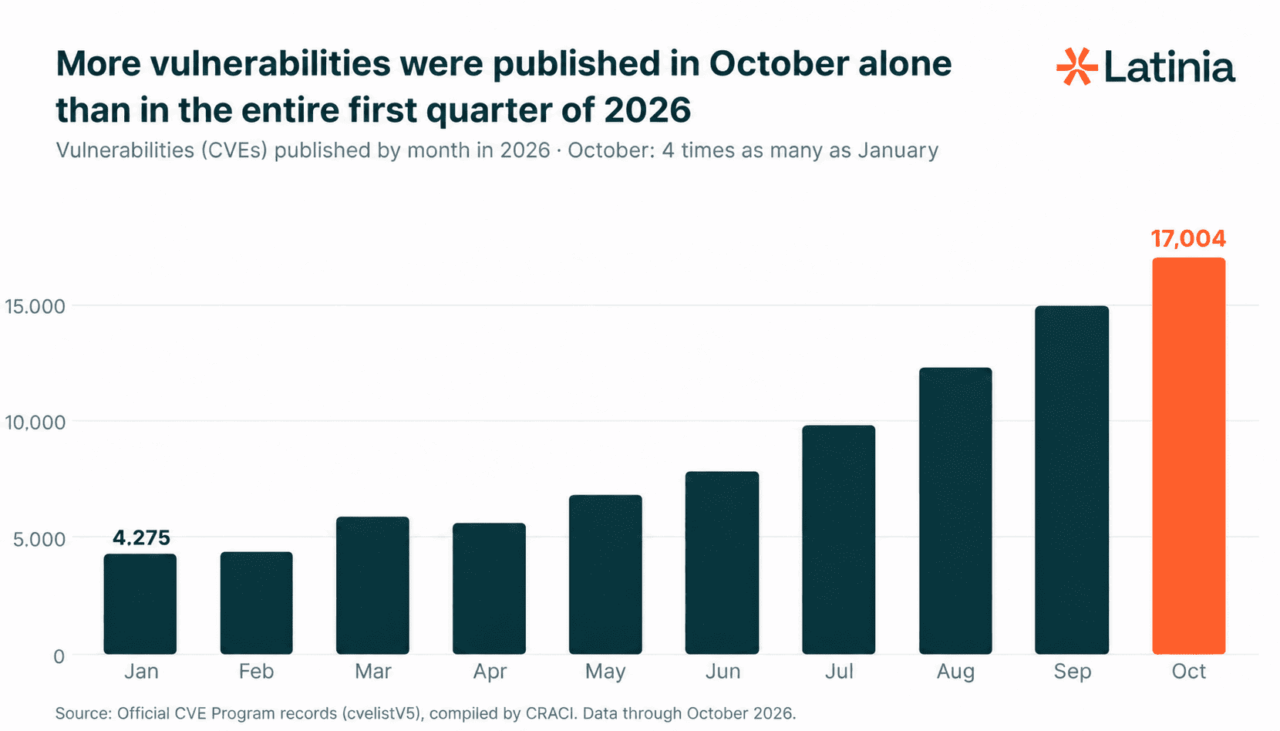
AI is finding flaws faster than ever. Official records from the CVE (Common Vulnerabilities and Exposures) program, the system that assigns a public identifier to every vulnerability, show that 88,841 vulnerabilities had been published in 2026 by the end of October, compared with 47,801 in all of 2025. October alone saw 17,004, more than the entire first quarter.
Some of them have hit technology that every bank relies on daily: PHP2Shell, two critical PHP flaws that researchers uncovered with the help of AI, and an Outlook flaw that attackers were already using to steal authentication data by the time Microsoft patched it.
More vulnerabilities mean more ways in for attackers. Is your institution ready? Here are five keys to staying protected, from your vendor chain to your software architecture.
Review your technology supply chain
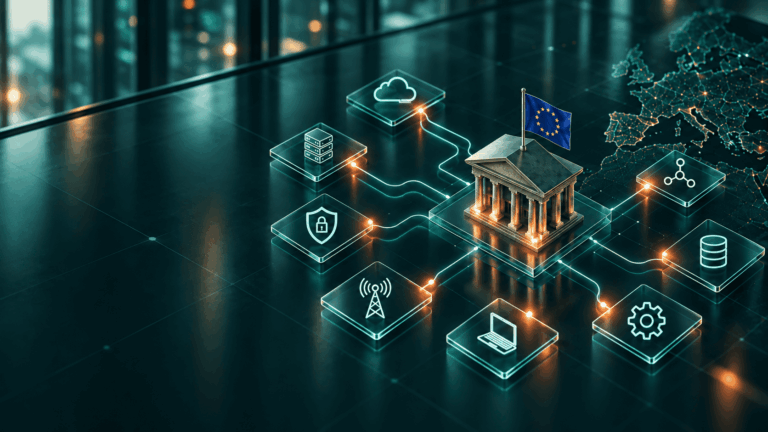
The cases of recent months have one thing in common: the flaws were in third-party technology, such as web servers or corporate email, not in systems built by the banks themselves. An institution’s exposure depends as much on its vendors’ ability to respond as on its own.
Supervisors are already watching. The European Central Bank has asked banks for an action plan to tackle AI-driven cybersecurity threats, and one of its priorities is reviewing the risk posed by technology service providers. The EU’s DORA regulation already requires institutions to manage both their own technology risk and that of their vendors, and in Latin America, countries such as Colombia, Chile and Brazil have specific cybersecurity rules for the financial sector.
Do you know which vendors support your critical services and how they would respond to a serious flaw? We cover this in our guide to channel provider governance and resilience.
When a serious vulnerability is disclosed, ask your critical vendors to confirm in writing whether it affects them and when they will fix it, even if the answer is that they are not affected. That record helps you act in time, and it is also the evidence your supervisor will ask for.
Require certified vendors
Security certifications won’t stop new flaws from appearing, but they show that a vendor has a method, audited by an independent body, for detecting, prioritizing and fixing them. For a banking technology provider, three certifications matter most:
- ISO/IEC 27001: certifies the information security management system.
- ISO/IEC 27017: adds specific controls for cloud services.
- ISO/IEC 27018: focuses on protecting personal data in cloud environments.
Requirements will only get stricter. The EU’s Cyber Resilience Act (CRA), adopted in 2024 and fully applicable from December 11, 2027, will require manufacturers of software and hardware sold in the EU to make their products secure by design, and those products will have to carry the CE marking as proof of compliance.
Are your vendors certified, and does their certificate cover the specific service they provide to you?
Keep your software up to date
According to Verizon’s 2026 Data Breach Investigations Report (DBIR), vulnerability exploitation has overtaken credential theft as the main entry point for cyberattacks in 2026: 31% of cases, compared with 13%. Keeping systems up to date is now the first line of defense.
Not every flaw is equally urgent. The catalog of known exploited vulnerabilities kept by CISA, the US cybersecurity agency, had 272 entries for 2026 as of October 23, compared with 245 in all of 2025. Total volume has nearly doubled, but the flaws actually used in attacks are growing far more slowly. The Outlook case shows why these deserve close attention: Microsoft rated it moderate severity, 6.5 out of 10, but it was already being exploited, and the fix shipped with Office updates, not Windows updates.
Is your software up to date? And what about your vendors’?
Invest in a modern architecture
How fast you can fix a flaw also depends on where your software runs. Banking and cybersecurity experts agree that institutions with cloud infrastructure can patch faster. Container-based architectures, managed with platforms such as Kubernetes, also allow updates to be rolled out gradually, without taking down services that must be available around the clock, such as payments or digital banking.
Does your software run on an architecture that lets you update it without interrupting service?
Choose vendors that use AI for defense
The same technology that is multiplying flaws can also find them before attackers do. In Project Glasswing, the initiative Anthropic launched in April with around 50 organizations, participants found more than 10,000 high- or critical-severity vulnerabilities in their first few weeks. The ECB also lists strengthening AI-powered defensive capabilities among banks’ priorities.
A vendor that builds AI into its security detects and fixes flaws in its software sooner. We also explore this in our article on agentic AI in banking.
Is your vendor part of Project Glasswing or Anthropic’s Cyber Verification Program, or OpenAI’s Daybreak program?
Does it protect its software with AI models built for cybersecurity, such as Claude Mythos 5.2 or GPT-6 Cyber?
Security as a shared effort with your vendors
AI has changed the rules of the game: flaws surface faster and get exploited sooner. Staying protected now depends as much on what each institution does as on how its technology vendors work.
At Latinia, we apply these principles to our own solutions. We hold triple ISO/IEC 27001, 27017 and 27018 certification, follow the CIS Controls, are aligned with DORA, and our software runs on Kubernetes, an architecture that makes it easier to keep up to date. We are also part of Anthropic’s Cyber Verification Program, the successor to Project Glasswing, and OpenAI’s Daybreak program, which give us early access to AI models built for cybersecurity, such as Claude Mythos 5.2 and GPT-6 Cyber.
When PHP2Shell was disclosed, we reviewed our systems and confirmed that our solutions were not affected. You can find the details on our security certifications page.
Frequently asked questions about vulnerabilities in 2026
Why have vulnerabilities risen so sharply in 2026?
According to NIST’s National Vulnerability Database (NVD), 88,602 vulnerabilities had been published as of October 24, 2026, compared with 49,972 in all of 2025. The main driver is the use of AI to review code and find flaws. AI is also speeding up attacks: according to the Bank for International Settlements, the window to fix a flaw before it is exploited has shrunk from weeks to minutes.
How can a bank protect itself against the rise in vulnerabilities?
There are five keys: review the technology supply chain, require certified vendors, keep software up to date, invest in modern architectures that allow updates without interrupting service, and choose vendors that use AI to detect and fix flaws. Much of a bank’s exposure depends on third-party technology.
What security certifications should a bank’s technology vendor have?
The most relevant are ISO/IEC 27001, which certifies the information security management system; ISO/IEC 27017, for cloud services; and ISO/IEC 27018, for protecting personal data in the cloud. In addition, from December 11, 2027, the EU’s Cyber Resilience Act (CRA) will require software and hardware sold in the EU to be secure by design and carry the CE marking.
Why is keeping software up to date so important?
Because unpatched software has become the main entry point for cyberattacks, according to Verizon’s 2026 Data Breach Investigations Report. Some flaws are exploited even when their severity is moderate, as happened with the Outlook vulnerability patched in November 2026, so it pays to focus on those already being used in attacks.
What do regulations require of banks’ technology vendors?
In Europe, DORA requires financial institutions to manage both their own technology risk and that of their vendors, and the ECB has asked banks for action plans to tackle AI-driven threats. In Latin America, there are specific cybersecurity rules for the financial sector, such as External Circular 007 of 2018 in Colombia, Chapter 20-10 of the CMF’s rules in Chile and Resolution 4,893 of 2021 in Brazil.