Banking communications with customers are no longer just a channel for sending notices. A transaction alert, purchase confirmation, security message, or financing notification can address a need,…
Read More
 Latinia
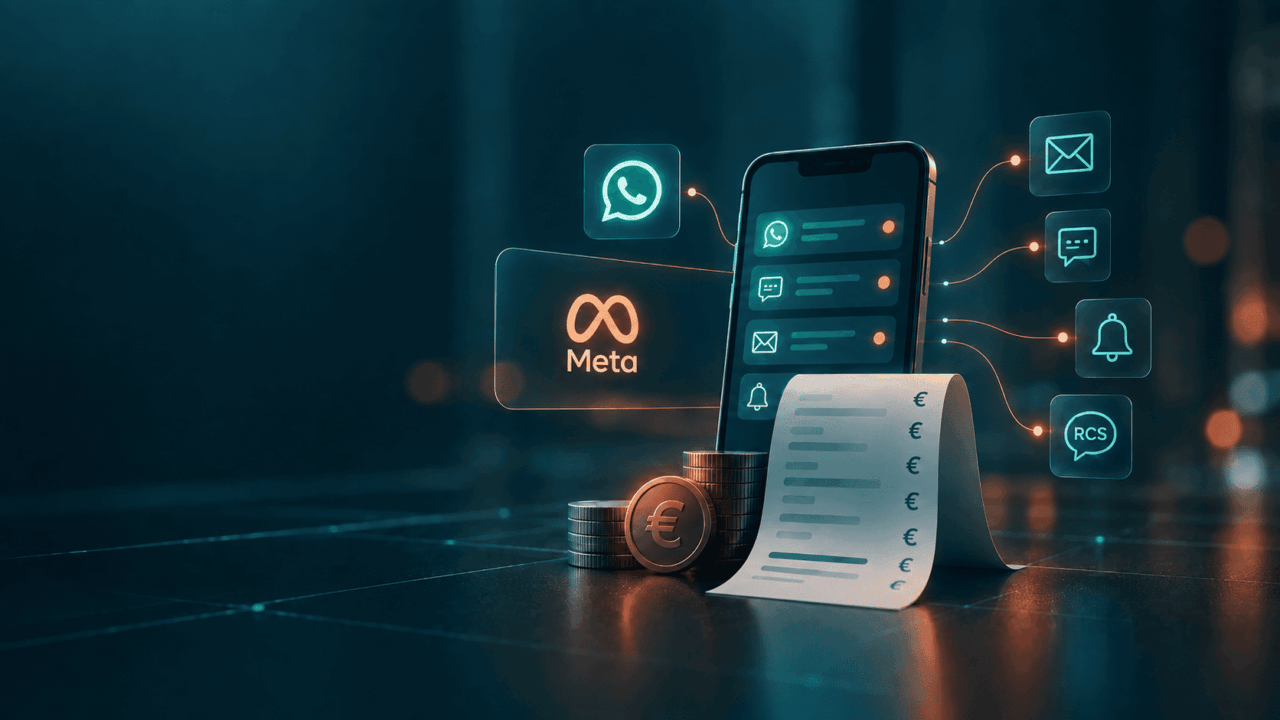
A bank notification costs benchmark across the four banking notification channels —SMS, WhatsApp, RCS and push— in Spain and Latin America. The rate changes by country and message type, but the price tag is only part of the story: how the text is written, how many customers have the channel enabled, and how many alerts have to be resent move far more budget than the unit price ever does.
On October 1, 2026, Meta starts charging for WhatsApp messages that are free today, and it also updates the rate cards in twelve markets. Two weeks earlier, Spanish carriers begin blocking messages whose sender isn’t listed in the CNMC registry. And in Colombia, the CRC has opened a proceeding set to review what bulk messaging actually costs.
None of the three touches a single negotiated rate. All three change what it costs to communicate.
It’s the same gap that shows up when a bank manages to cut a channel’s unit price and the invoice doesn’t move. What the provider bills you for is the send. What the institution actually needs is the delivery —and between the two you’ll find messages that split in half, customers who never enabled the channel, and alerts that get paid for twice just to arrive through a fallback route.
The useful question for a CIO, a CTO or a head of digital channels isn’t how much a message costs. It’s how much it costs to get an alert into the customer’s hands.
This article pulls together the rate cards for all four channels across Spain and Latin America as of September 2026, translates them into cost per thousand customers notified, and breaks down everything that never shows up on the provider’s invoice.
Each channel charges for a different unit, and that unit can have more impact on bank notification costs and on an institution’s communications budget than the difference in cents between channels.
| Channel | Billing unit | Reference | Variable that drives the cost |
|---|---|---|---|
| Push | “No delivery cost” | 0 per message delivered; the cost lies in the platform and infrastructure | Acceptance rate of the installed base |
| Template delivered | See table by market | Category assigned to the template | |
| SMS | Segment delivered | €0.03–0.05 in Spain; from MXN 0.26 in Mexico | Text length and encoding |
| RCS | Richness level or session | Parity with SMS in plain text | Format and carrier coverage |
A2P SMS—application-to-person, the automated messaging a business sends to a user—is procured through an aggregator at a rate well below the retail price a consumer sees on their phone bill, both in Spain and across the region. The global average runs between USD 0.01 and 0.05 per segment, with European destinations sitting at the high end and much of Latin America coming in lower.
The specific rate in Colombia, Chile, Peru, Ecuador or Central America depends on the destination carrier and on whether the route is direct or aggregator-based—so it’s worth requesting it market by market and route by route before drawing any comparison. Latinia lays out the criteria for that comparison in its guide on how to choose the right SMS provider for your bank.
On WhatsApp, Meta charges per delivered template as of July 2025, with rates set by category and by the recipient’s country, and it updates pricing only on the 1st of each quarter. Access runs through the platform’s API, typically contracted through a BSP—business solution provider, the Meta-authorised partner that resells the service and adds its own margin on top of the wholesale rate.
RCS—rich communication services, the SMS successor built for richer content—is priced in tiers: plain text typically trades at parity with SMS, while rich content runs two to three times higher. Coverage varies widely from country to country, and when the device or the carrier doesn’t support it, the message falls back to SMS and is billed as such—so the real budget for an RCS campaign always carries a share of SMS traffic.
Push carries no per-delivered-message charge, but that doesn’t make it free. The bank pays for the management platform, the infrastructure, token upkeep and the lifecycle of customer preferences. What Firebase Cloud Messaging and Apple’s push notification service—FCM and APNs, Google’s and Apple’s gateways—don’t charge for is the transport.
Meta applies the rate of the recipient’s country, not the sender’s —and not every country has its own rate.
Ecuador, Guatemala, Panama, Costa Rica, the Dominican Republic, Bolivia, Honduras, El Salvador, Nicaragua, Paraguay, Uruguay and Venezuela are all billed under a single regional band.
For a financial group operating across Spain and Latin America, that turns one and the same communication into several separate invoices.
| Market | Marketing | Utility | Authentication |
| Colombia | ~0,016 USD | ~0,005 USD | ~0,005 USD |
| Ecuador, Central America and the Caribbean («Rest of LATAM» band) | ~0,015 USD | ~0,005 USD | ~0,005 USD |
| Argentina | ~0,027 USD | ~0,007 USD | ~0,007 USD |
| Mexico | ~0,031 USD | ~0,008 USD | ~0,008 USD |
| Peru | ~0,045 USD | ~0,013 USD | ~0,013 USD |
| Chile | ~0,059 USD | ~0,013 USD | ~0,013 USD |
| Brasil | ~0,063 USD | Variable | Variable |
| Spain | ~0,085 USD | ~0,013 USD | ~0,030 USD |
These are Meta’s reference rates before the provider’s margin, as of September 2026. Since April 2026, Meta bills in local currency in Argentina, Chile and Colombia. This table changes on 1 October 2026: Meta updates marketing rates in six markets and utility and authentication rates in twelve, while nine markets leave their “Rest of” bands to get their own rate. It’s worth checking every figure against Meta’s official rate card and with your BSP before you budget.
Three takeaways.
First: between the cheapest and the most expensive market there’s a gap of more than five to one on the same template, which means segmenting your base by country before launching stops being a refinement and becomes a budgeting decision.
Second: within the region the gaps are wide too, and an institution present in Colombia and Chile pays almost four times more for the same marketing message in the latter market.
Third, and this one hits Spanish banking squarely: Spain is the only market in the table where authentication doesn’t cost the same as utility —it costs more than double. Across Latin America, an OTP over WhatsApp costs the same as an instalment due-date reminder; in Spain, it doesn’t. That means in the Spanish market SMS still competes well as an OTP channel, whereas in the region the WhatsApp authentication template displaces it more easily —provided the customer has the channel enabled.
Spain. From 15 September 2026, the blocking obligations tied to the CNMC’s Alias Registry come fully into force, as set out in Order TDF/149/2025 and developed by Circular 1/2026, published in the BOE. Carriers must block any SMS, MMS or RCS message whose alias isn’t listed in the Registry —or which, though listed, doesn’t come from a provider authorised for that specific alias. The alias allows between 3 and 11 characters, with no accented vowels and no purely numeric formats, which forces a review of legacy sender IDs. Foreign institutions sending to Spanish numbers aren’t off the hook either: a Latin American bank with customers in Spain needs its alias registered just like a local one.
Colombia. In June 2026, the CRC published a two-phase regulatory proposal. The first introduces a sender identifier visible in the SMS header, along with strict identity validation for those sending bulk messages. The second will review the remuneration of the A2P SMS service. The Commission puts at more than 252 million pesos a day the amount claimed over fraud arriving through calls and text messages —a vector that routinely impersonates financial institutions.
Neither country has created an equivalent sender registry. In August 2026, Chile launched its mandatory registry of prepaid mobile lines, tying each number to an identity and covering some 4.4 million users. Peru runs Renteseg on the terminal devices themselves. Both approaches go after the identity of the line or the handset, not the sender —so in these markets a bank’s alias remains unprotected against impersonation, and the defence falls to route selection and the provider’s own controls.
Announced on 1 July 2026 and confirmed by the platforms running the API, on 1 October 2026 Meta begins charging for outbound service messages —the free-form replies an agent or assistant sends— and for utility templates sent within the 24-hour customer service window. Until 30 September, they remain free.
The detail matters, and it weighs directly on bank notification costs: each number gets 1,000 free service messages a month, with no rollover, and from message 1,001 onward it’s billed at the recipient market’s utility rate with no access to volume discounts —unlike utility and authentication templates. On top of that, accounts without a payment method registered before 30 September will stop delivering service messages as of 1 October.
SMS segmentation. A message fits in 160 characters only if every one of them belongs to GSM-7, the basic character set defined in the 3GPP TS 23.038 specification, historically known as GSM 03.38. In that alphabet, “é” and “ñ” are in; “á”, “í”, “ó” and “ú” are out. A single one of those vowels forces UCS-2 encoding —two bytes per character— cuts the limit to 70 characters and doubles the charge. A phrase as common in banking as “código de verificación” already pushes the message into two segments, in any Spanish-speaking market.
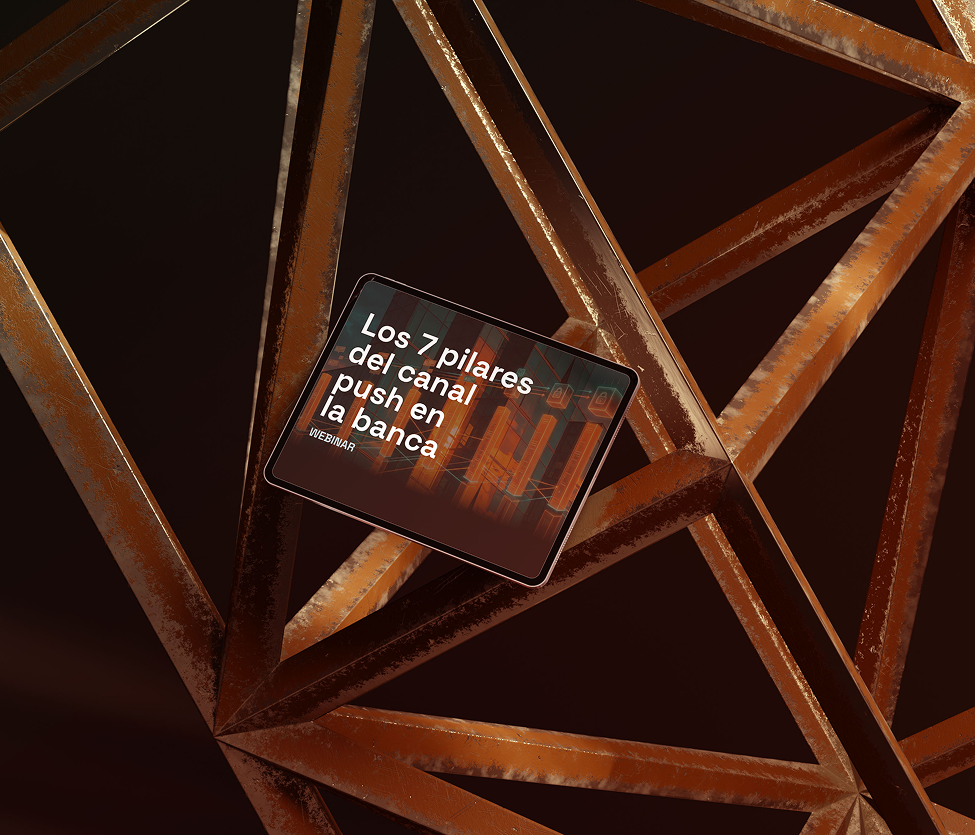
Push’s reach ceiling. Airship’s benchmarks put the median notification opt-in rate on Android at 59.5% in 2024, down from 71.3% in 2023, and iOS at around 49%. Roughly half of a banking app’s install base falls outside the channel with no transport cost. Latinia works that percentage in its guide The 7 pillars of the push channel in banking.
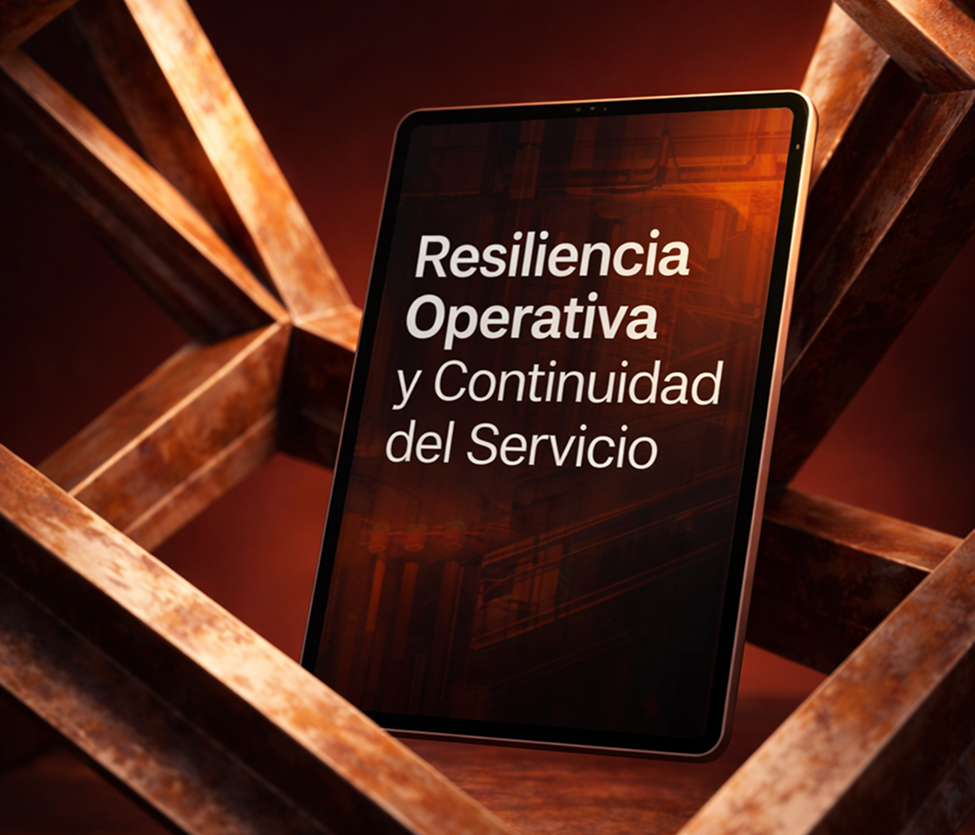
Fallback and non-delivery. When the preferred channel doesn’t confirm receipt, the institution pays twice for the same alert. And when there’s no fallback, the cost resurfaces on another line: a failed authentication, a blocked transfer, a complaint. The mechanisms that govern this are covered in the operational resilience and service continuity guide.
Template classification. An instalment due-date reminder approved as marketing can cost three to six times what the same message costs classified as utility, depending on the market.
EXPERT TIP
When Meta reclassifies a template from utility to marketing, the alert lands with the WhatsApp Business account administrator, not the team that controls the budget. It’s worth defining who reviews those notifications and how often: in the markets in the table, that reclassification multiplies the cost of the same message by three to six.
The formula for calculating bank notification costs works with figures the institution already has on hand:
Applied to one million transactional alerts a month, using the reference rates in this article:
| Scenario | Market | Monthly cost | Variance |
| All SMS, single segment | Spain | 40.000 € | Caso base |
| All SMS, two segments due to one accented vowel | Spain | 80.000 € | +100 % |
| Push → SMS waterfall, 55% effective opt-in | Spain | 18.000 € | −55 % |
| All SMS | Mexico | ~260.000 MXN | — |
| WhatsApp utility template, outside the window | Mexico | ~8.200 USD | — |
| WhatsApp utility template, outside the window | Regional band (Ecuador, Central America) | ~5.000 USD | — |






Contact