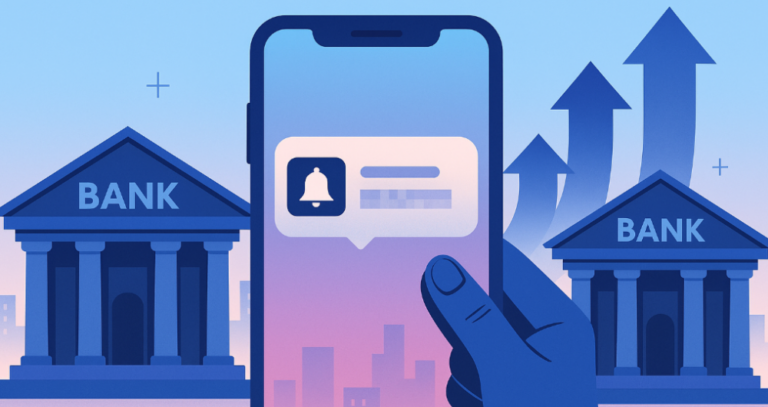
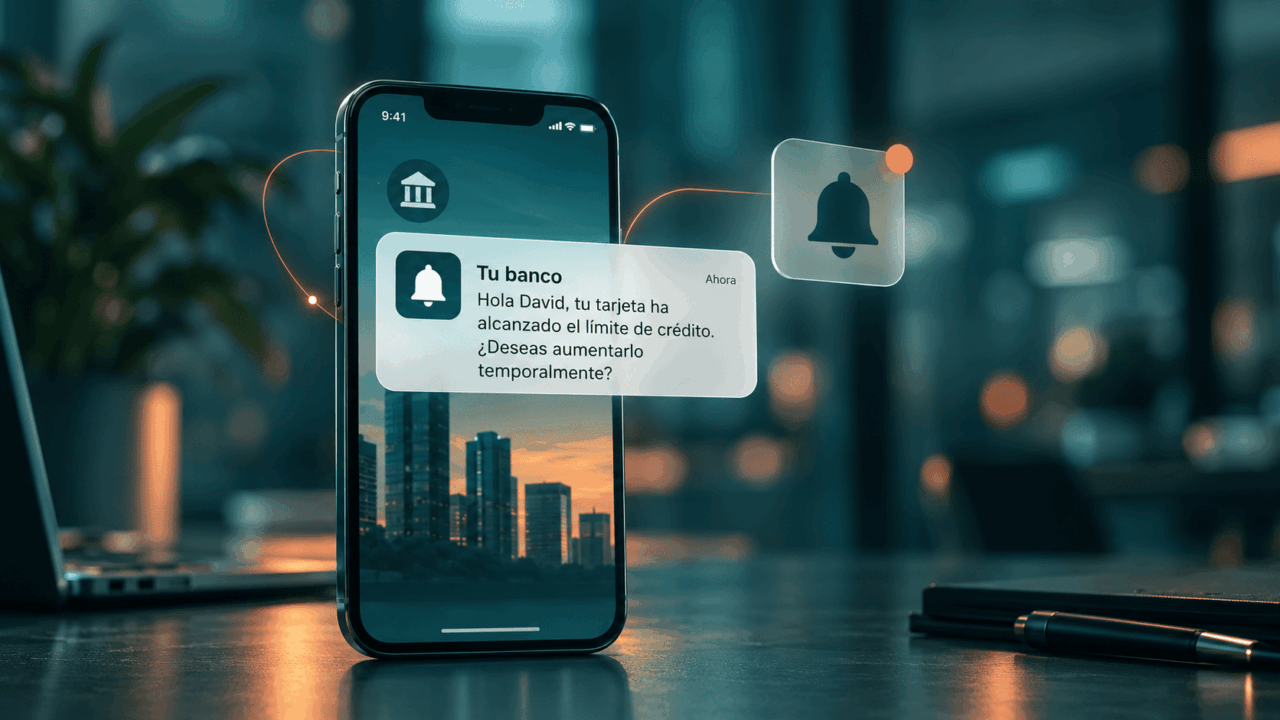
Are banks making the most of their push notifications?
In an increasingly digital environment, where speed and personalization define the customer experience, push notifications have evolved from just another channel into a key part of banks’ communication strategies.
In 2025, the challenge isn’t simply showing up on a smartphone screen, but standing out on it. With more demanding users, stricter privacy requirements, and growing competition for attention, banks need to rethink how they design, send, and evaluate their push notifications if they want to stay relevant.
In this article, we look at concrete examples of institutions already setting the pace with more sophisticated strategies and offer an overview of current data on the use of push notifications in banking to consider these questions:
- Is this channel truly effective for building trust and loyalty with financial customers?
- To what extent can real-time notifications replace human interaction?
- Are they an opportunity for financial inclusion or a tool that risks overwhelming the most active users?
- And how can their real impact on customer decision-making be measured?
Banks leading the way with Push Notifications
Some banks are already setting the trend by adopting more advanced strategies that combine personalization, automation, and real-time analysis.
Below, we look at specific examples that show how these institutions have improved their results through smarter, more contextual management of push notifications.
Axis Bank: Automation and personalization with artificial intelligence
This bank adopted an approach based on contextual personalization and real-time automation to improve conversion in key campaigns like credit card upgrades and personal loan applications. It used customer journeys that tracked user actions and triggered personalized push notifications at the right moment, relying on real-time information.
The strategy was further supported by AI solutions that enabled emotionally relevant messaging and automated A/B testing to identify the most effective channel for each situation.
Results achieved:
- A 27% increase in conversions from users who had abandoned the credit card upgrade process.
- A 13% improvement in conversion rate for personal loans through mobile notifications.
- A significant reduction in cost per subscription thanks to a more efficient communication strategy.
PVcomBank: Behavioral analytics for contextual messaging
Aiming to reduce costs and improve the customer experience, this bank chose to replace traditional SMS with push notifications and in-app inbox messages. It implemented a strategy based on behavioral analytics to identify abandonment points in digital processes like opening a savings account or onboarding via eKYC.
Once these critical moments were identified, personalized reminders were triggered to help users complete the process.
Results achieved:
- A 134% increase in digital adoption of banking products.
- Approximately one million dollars saved by replacing SMS with owned digital channels.
- A 95% reduction in average call center handling time thanks to clearer, more proactive communications.
Niyo: Real-time triggers based on customer profile data
This digital bank structured its push campaigns throughout the entire customer lifecycle, from initial onboarding to post-transaction and service update notifications. It used profile and behavioral data to personalize each message and real-time triggers that respond to specific events, such as mobile number verification or selecting a financial product within the app.
Each user flow had its own conversion funnel and personalized campaigns tailored to their stage in the customer journey.
Results achieved:
- Doubled the click-through rate on key personalized messages.
- Reached a 40% conversion rate in financial product activation flows.
- Increased customer retention through ongoing engagement campaigns.
These examples show that push notifications can be much more than simply sending messages. When used strategically, they enable precise interactions, improve the customer experience, and optimize business results.
To understand why these strategies are becoming increasingly necessary, it’s worth looking at recent data on the growth of mobile banking and user behavior with this communication channel.
Latest data on mobile banking usage
Mobile banking usage continues to grow steadily worldwide. According to the 2024 Research and Markets report, the global mobile banking market will reach $5.7 billion by 2031, with an annual growth rate of 16.5% during the 2024–2031 period.
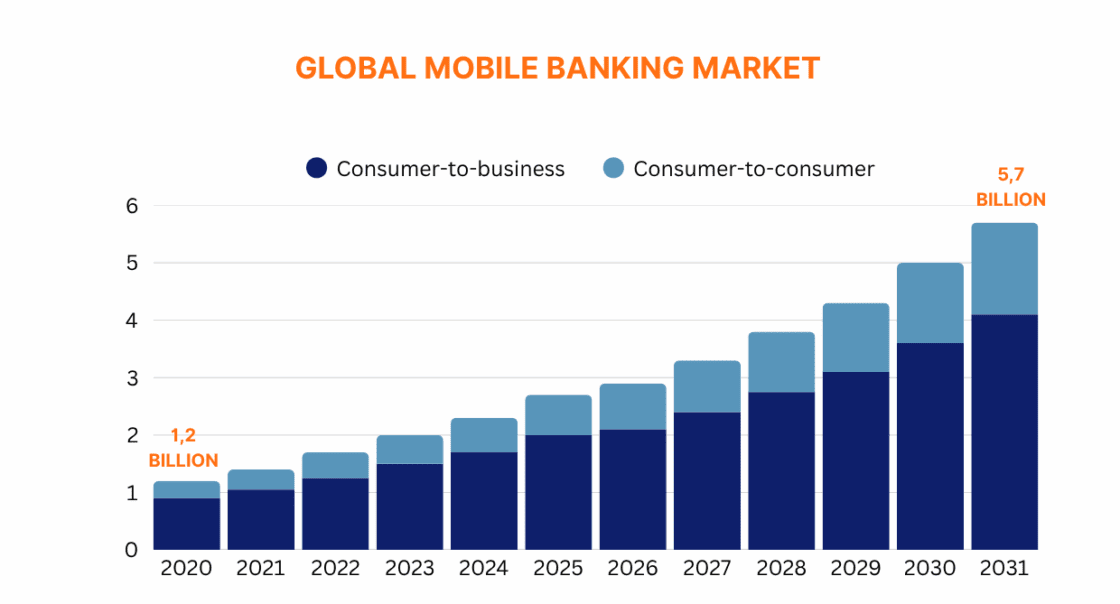
Europe is expected to account for around 30% of that market, driven by the sector’s digital transformation and the introduction of new regulations like PSD3 and the Payment Services Regulation (PSR). These rules will strengthen payment security and require clearer, more immediate communication with customers, especially for sensitive transactions.
In this context, push notifications could become an even more important channel for delivering real-time updates, alerting users to unusual activity, or reinforcing authentication processes in line with regulatory requirements and user expectations.
The report also highlights the significance of platforms like iOS, which generated 25% of revenue in 2023, and the rise of peer-to-peer transactions, which now account for 20% of total global volume.
Key data on Push Notifications in the financial sector in 2025
Based on the Airship report, we examine the most relevant indicators for the financial sector to understand what’s working and where there’s room for improvement.
Opt-in rates
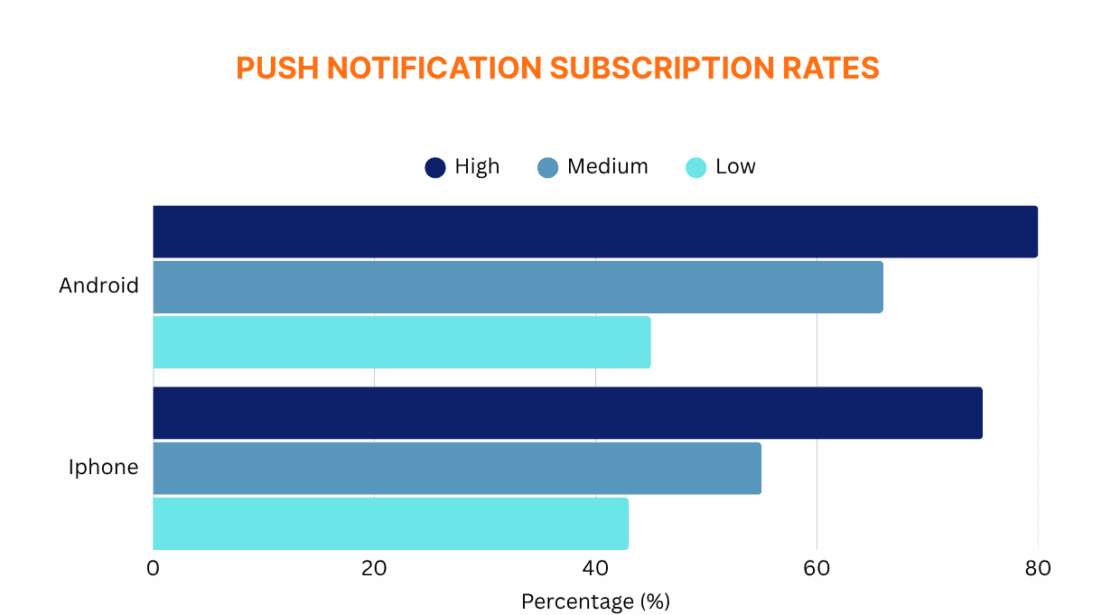
Users who agree to receive notifications make 13% more purchases than those who don’t, and in top-performing apps that increase can reach up to 39%.
In 2025, opt-in rates for financial apps show a clear difference between Android and iOS. On Android, where users were traditionally opted in by default, new privacy policies are reducing those percentages. In contrast, on iOS, although rates are lower, they remain stable.
Direct open rates
According to 2025 data, financial apps on Android continue to show higher open rates than on iOS. This difference is due to how notifications are handled on each system: on Android, they remain visible on the lock screen until the user dismisses them, while on iOS they disappear when the device is unlocked and are grouped in the notification center, reducing their immediate visibility.
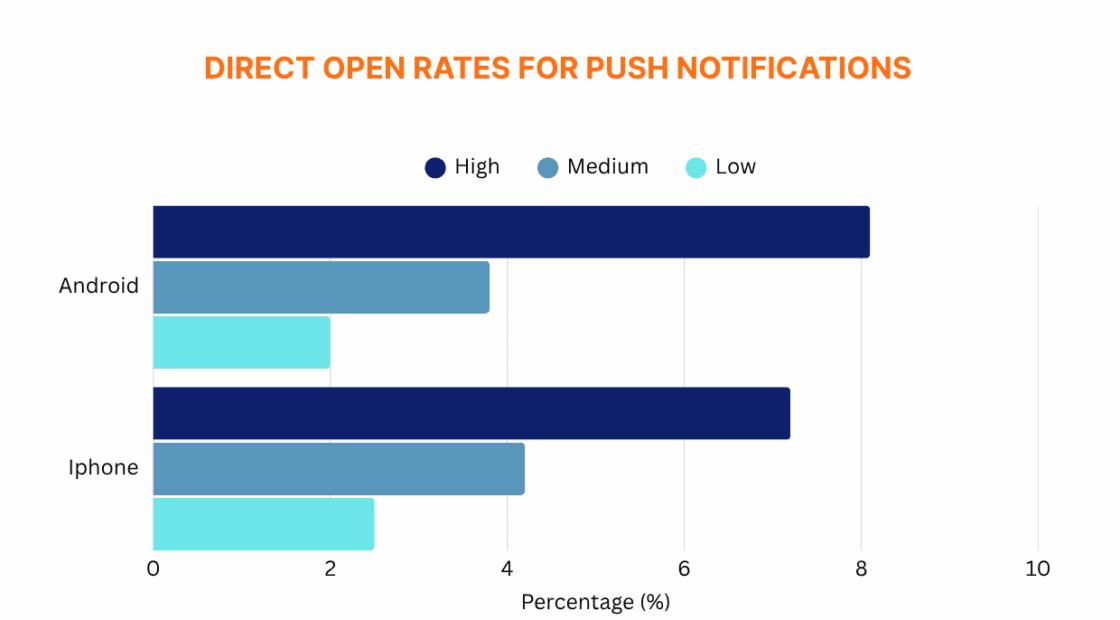
Despite new features that let users filter and prioritize messages, open rates have remained relatively stable.
Average number of monthly notifications
The number of push notifications sent per user per month in the financial sector remains moderate: an average of 13.3 notifications per user on Android and 15.9 on iOS.
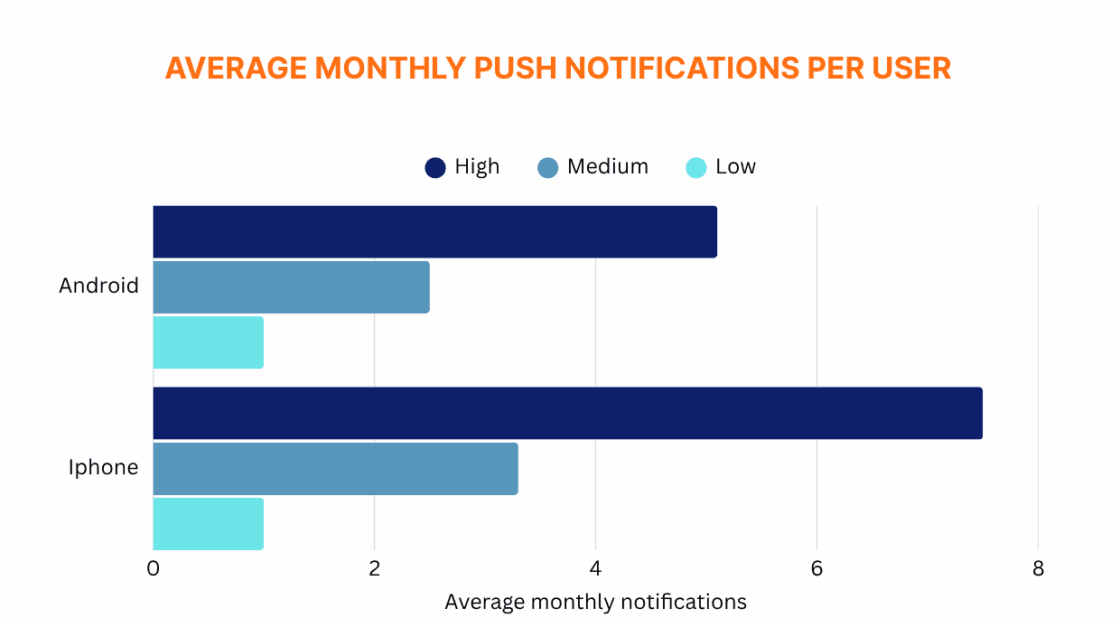
In 2024, there was a general increase in the number of messages sent, driven by the need to keep users informed. However, it’s important to consider the risks of over-communication: when messages are too frequent or not relevant, users tend to disable notifications or even uninstall the app.
How to improve your bank’s Push Notification metrics
At Latinia, with over 20 years of experience in the financial sector, we’ve found that one of the most effective ways to improve push notification performance isn’t by increasing their volume, but by making them more relevant to each customer.
In this context, hyper-personalization stands out as one of the most reliable strategies. It’s not just about including the user’s name, but about understanding their behavior, interpreting real-time events, and tailoring the message to the specific context of each situation.
At Latinia, we are constantly evolving to help our clients improve their metrics. We support banks in adopting a more personalized communication model by offering technology that enables notifications triggered by transactional data, with specific rules and real-time analysis.
The goal: for every message to deliver value, at the right moment, through the most effective channel.
Best practices to optimize your Push strategy
Having solid technology infrastructure is essential but not enough. For push notifications in banking to have real impact, it’s also important to apply certain best practices in their design, delivery, and follow-up:
- Personalize from the first message: tailor content to the customer’s profile, behavior, or preferred channel. Avoid generic messages that may feel irrelevant.
- Let users set their preferences: offer a control center where they can choose what types of notifications they want to receive and how often. Tools like Latinia’s Subscription Engine allow customers to design their own alert service, choosing how and when they want to be informed.
- Use A/B testing: experiment with different formats, timings, tones, and calls to action to see what works best for each segment.
- Leverage visual elements: well-used icons, emojis, or images can improve open rates and message understanding.
- Avoid over-communication: more isn’t always better. Excessive messaging can lead to user frustration and increased opt-outs.
- Measure and adjust continuously: track key metrics like opt-in rate, open rate, or reaction time, and refine your strategy based on results.
- Integrate push with other channels: ensure the customer experience is multichannel and consistent across all touchpoints, including app, email, SMS, or web.
Conclusion: Toward more effective, user-centered communication
Today’s banking is placing greater focus on customer-centered strategies. It’s no longer just about offering products or services, but about creating experiences that truly connect with users’ needs and expectations. Customers have changed: they’re more digital, more demanding, and used to receiving instant, personalized communications across multiple channels.
Mobile has become the main channel, and push notifications are one of the tools to maintain an active connection. But for those notifications to truly deliver results, sending them isn’t enough—they need to be personalized.
What’s the point of sending a message if it doesn’t generate any interest? It’s a waste of time and resources. Every communication should deliver value, arrive at the right moment, and match the customer’s profile. Only then does it become an opportunity to build loyalty, drive business, and establish trust.
Ready to improve your customer interactions? Contact Latinia today to learn more about how the Next Best Action solution can help your bank thrive.