RCS security in banking: beyond rich messaging
Rich Communication Services (RCS) has become one of the most promising messaging channels for the banking industry in markets where user digital…
Read More
 Latinia
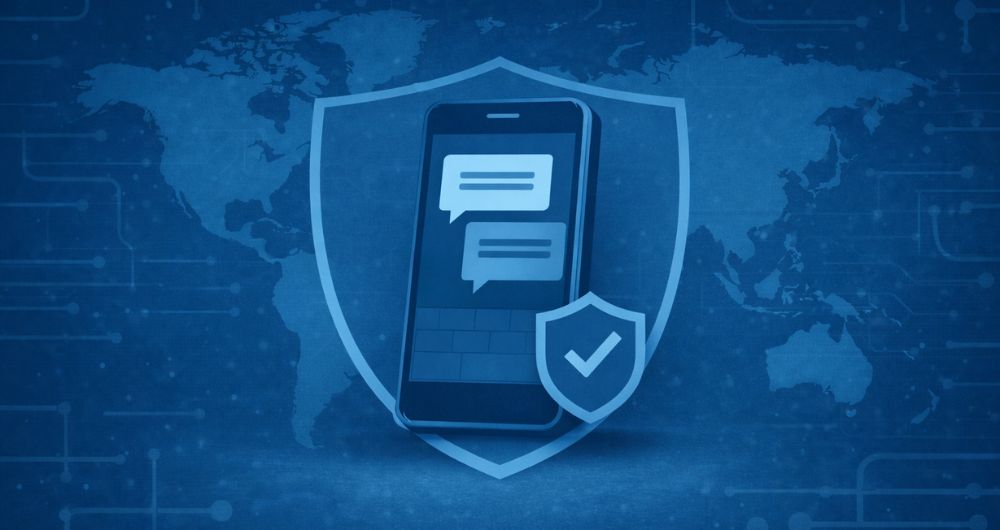
Rich Communication Services (RCS) has become one of the most promising messaging channels for the banking industry in markets where user digital adoption is moving fast. It lets financial institutions go beyond traditional SMS in how they connect with customers: it supports multimedia messages, interactive buttons, and, most importantly, brings advanced security and authentication capabilities.
With fraud on traditional messaging channels on the rise and growing regulatory pressure around data protection, a key question comes up for banks and customers alike: does RCS really meet the security and trust standards the financial sector demands?
For more than two decades, SMS was the main channel banks used to send security alerts and operational notifications. Its speed and ubiquity made it essential, but also exposed it to threats like phishing and SIM swap fraud.
In recent months, security has stopped being a theoretical concern and become a very real, urgent need.
The move to RCS represents a meaningful step forward. It not only offers a richer, more conversational user experience with images, documents, and interactive buttons, but also brings key technical features such as end to end encryption and sender verification.
This security layer is no longer just a theoretical discussion. It has turned into a practical requirement.
At Latinia, we are seeing more and more banks asking to include RCS in their notification strategies, driven by the rise in fraud attempts and impersonation on traditional channels. The need for stronger sender identification and higher end user trust is clearly speeding up interest in this standard.
The numbers back this up:
The industry is moving toward more reliable, conversational messaging models, and Latinia is keeping pace with that shift by adding RCS (Rich Communication Services) as a newly supported channel in the latest product release.
One of the most relevant advantages of RCS over SMS is its ability to verify the sender’s identity.
With SMS, impersonation attacks such as phishing are a constant threat, since cybercriminals can spoof messages that appear to come from legitimate banks. RCS addresses this by verifying profiles and logos, allowing banks to prove their identity in both visual and cryptographic ways.
In Spain, RTVE reported that BBVA has implemented RCS to deliver messages with verified identity, adding an extra layer of protection against smishing and giving users confidence that alerts come from a trusted source.
In Mexico, according to GSMA, RCS messaging is already available and being used by multiple brands and companies as a business messaging channel. Carriers such as América Móvil, AT&T México, and Telefónica, along with messaging technology providers like Concepto Móvil, one of our RCS Partners, provide support. This shows that RCS is already a reality in Mexico, with infrastructure and reach in place for financial institutions and other industries to adopt it.
RCS security goes beyond sender authentication. A key strength of this channel is the strong protection it provides while data is in transit.
RCS relies on secure IP based infrastructure, ensuring that information is encrypted and protected throughout transmission. This level of protection is essential in an increasingly demanding regulatory environment.
For financial institutions subject to regulations such as GDPR, PSD3, or Mexico’s Fintech Law, it is critical that the messaging solutions they use to communicate with customers meet the highest standards for security and data privacy.
Bringing RCS into an advanced messaging infrastructure not only improves data in transit protection, but also supports compliance with current regulatory frameworks and internal data protection policies.
In the digital banking landscape, communication channels play a key role in building customer trust and keeping transactions secure. The adoption of RCS (Rich Communication Services) is changing how banks interact with customers, enabling messaging that is more secure, interactive, and personalized.
Still, for RCS to become more than just another tool and turn into a real part of a bank’s strategy, its integration needs to be thoughtful, aligned with business goals, and adapted to an increasingly demanding regulatory environment.
The security of a channel is not only about infrastructure. From an operational point of view, it also means having full control over the notification process. This includes defining who sends each message, under which rules, with what priority, and how potential system failures are handled.
In this context, Latinia plays a key role by providing governance and notification management solutions that allow banks to integrate RCS within a decision centric solution focused on real time transactional event decisioning and delivery. At Latinia, we make sure every message is sent according to each bank’s internal rules, ensuring security, traceability, and regulatory compliance.
Our integration with the banking core, combined with the rollout of the RCS channel, allows banks to:
Want to see how Latinia fits into the banking architecture to optimize communications management and ensure operational security with RCS?
Channel governance, by ensuring operational security and communication continuity, lays the groundwork for RCS to be not only a secure channel, but also a powerful way to improve the customer experience.
By enabling interactive and personalized notifications, RCS lets banks create more engaging, dynamic communication. Users can receive security alerts, payment confirmations, account updates, and more, with the added value of interactive buttons, images, and links to secure web pages.
This improves usability and interaction, and also increases response and engagement rates. Beyond being just a messaging tool, RCS becomes a key driver in banks’ loyalty strategies, delivering personalized, secure, and timely messages that strengthen customer relationships and improve overall satisfaction.
Growing concern around fraud on traditional messaging channels and increasing regulatory pressure on data protection have made trust a core pillar of banking communications. In this context, the data is clear: a meaningful percent of users distrust alerts sent via SMS, creating both operational and reputational challenges for banks.
Against this backdrop, RCS stands out not just as a new technology option, but as a strategic response to the security and trust requirements the financial sector must meet. With its ability to bring in advanced verification and authentication features, RCS improves message reliability and creates a real opportunity to rebuild user trust.
In an environment that keeps raising the bar, where security and customer experience are essential, RCS positions itself as a comprehensive solution that supports regulatory compliance while also strengthening the trust relationship between banks and their customers.
The future of digital banking is defined by the need to build trust through secure, efficient channels. With its potential to reshape notification experiences, RCS is ready to play a central role in this next phase.
At Latinia, we have been working for years with mission critical notification architectures in the financial sector, bringing RCS into multi-channel governance, resilience, and failover models.
Add RCS with Latinia
If your organization is considering adding RCS as a new communication channel for customers, we will be glad to support you throughout the rollout and end-to-end management of the process, ensuring security, traceability, and operational continuity from day one.









Contact