
Banking customer experience is the impression left by every interaction between a bank and its customer, from opening an account to receiving a transaction alert. Neobanks have made it their main competitive edge, and the rule behind it is simple: it’s won day to day. The bank that’s there for every transaction becomes the customer’s primary bank.
In just three weeks of September, digital banking in Latin America saw more activity than in many full quarters. On September 15, Revolut received a license from Colombia’s Financial Superintendence (SFC) to operate as a regulated bank in the country, with launch planned for 2027. Two days later, Lulo Bank introduced Lulo Empresas, its financial services ecosystem for businesses. On September 30, Nubank ruled out a deal with UK-based Monzo and reaffirmed its focus on Brazil, Mexico and Colombia, along with its international expansion through Nu Global. Meanwhile, Revolut passed one million customers in Mexico less than eight months after launching its banking operations there.
Four moves, one direction: neobanks are competing to become their customers’ everyday bank. And their strongest argument is customer experience.
An ecosystem of more than 3,000 fintechs
The fourth report on fintech in Latin America and the Caribbean by the Inter-American Development Bank (IDB) and Finnovista counted 3,069 fintech companies across 26 countries in 2023, up from 703 in 2017. Payments and remittances (21% of platforms) and lending (19%) are the most crowded segments. After that expansion, 41% of fintechs name scalability as their main challenge: the phase of growing in numbers has given way to one of growing customer relationships.
Within that ecosystem, neobanks are the segment competing most directly with traditional banks for the everyday relationship. In Colombia, according to the industry association Colombia Fintech, Colombians’ deposits in neobanks grew tenfold in twelve months to around 2 trillion pesos, with Nu Colombia, RappiPay and Lulo Bank attracting the most.
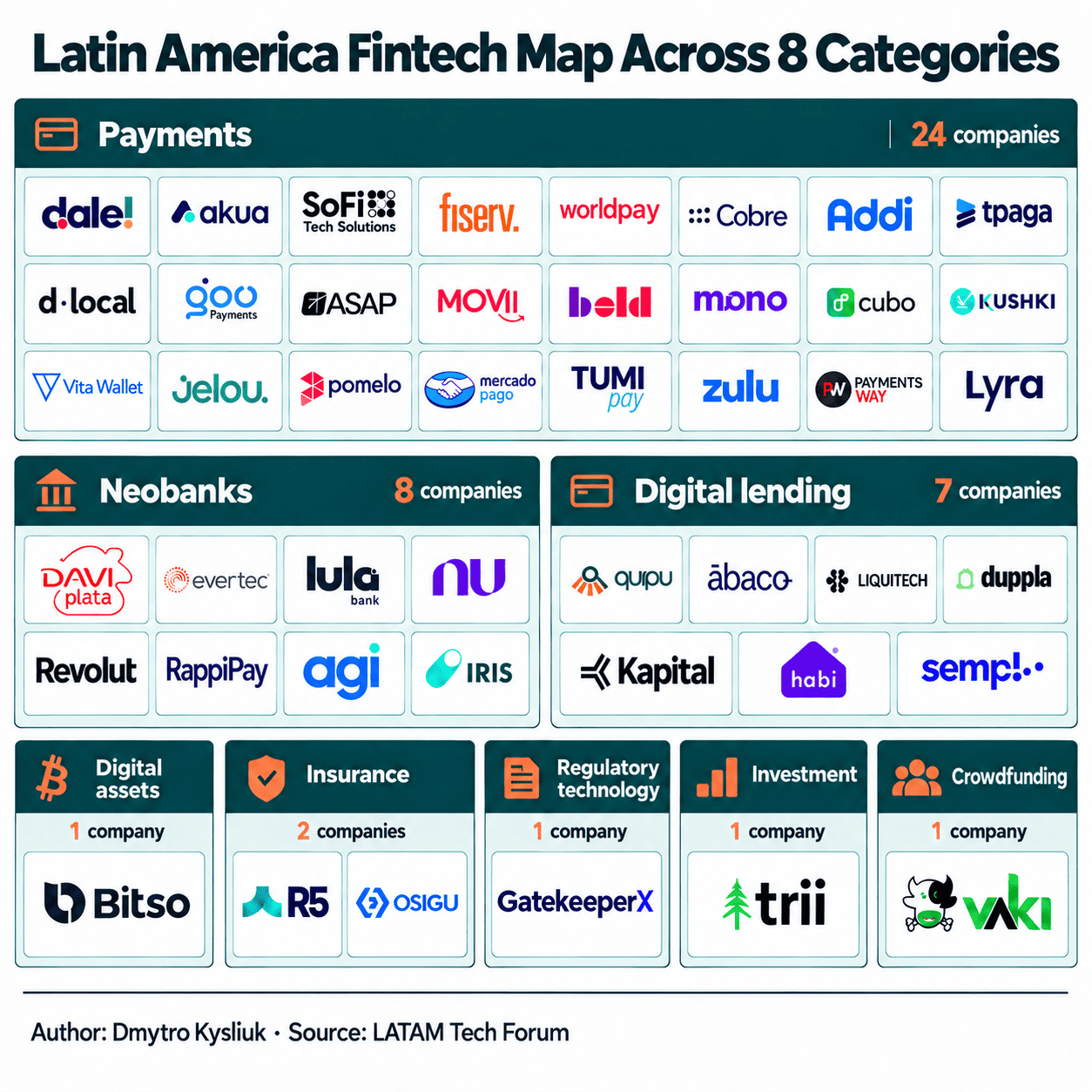
A recent map of the ecosystem, shows how the segment is made up. Alongside digital natives Nubank and Revolut, its eight neobanks include DaviPlata, Lulo Bank, RappiPay and IRIS, all launched by traditional financial groups or in partnership with them. That mix of origins is the real story: traditional banks are already competing on customer experience through their own brands.
Why neobanks win on customer experience
Satisfaction data from Europe and the United States points the same way. In Spain, YouGov’s Consumer Bank Rankings 2026 describes a split: neobanks lead on satisfaction, while traditional banks lead on consideration, with six of the ten top-rated banks being digital players: ING, Caja Laboral, OpenBank, Revolut, Trade Republic, N26, imagin, Evo Bank, Cajamar, and BBVA.. In the United States, J.D. Power’s 2026 U.S. Direct Banking Satisfaction Study finds that digital-only banks keep winning customers from traditional banks thanks to personalized digital experiences, though there’s room to improve everyday customer service.
Three design elements sit behind that advantage:
- Frequency: the app is part of the customer’s routine, and every use is a chance to build the relationship.
- Immediacy: transactions, alerts and responses in real time.
- Simplicity: products with clear terms that customers can sign up for and manage from their phone.
The split YouGov reveals is the key to the analysis. Neobanks win on experience; traditional banks keep the trust. The race is about who turns their advantage into a full relationship first.
Three paths to the same customer relationship
Digital-native neobanks: depth and scale
Nubank shows what the path of depth looks like. In the second quarter of 2026, it closed with 139 million customers, topped $1 billion in quarterly net income for the first time, and pushed its monthly activity rate above 86%. Its next goal is value per customer: according to the company itself, its average revenue per active customer (ARPAC) was around $16 in the first quarter, compared with roughly $40 at traditional banks. AI-driven personalization, cross-selling and its AI-powered personal financial advisor are its bets to close that gap.
Revolut represents the path of global scale with its own licenses. It has more than 80 million customers, aims to reach 100 million by mid-2027, and Colombia is its sixth full banking license, after the UK, France, Australia, Lithuania and Mexico.
Traditional groups with their own digital brand
Davivienda’s DaviPlata is the most visible example. In March 2026, it evolved from a digital wallet into a full neobank model for more than 19.5 million users in Colombia, adding a digital credit card and small-business loans. Lulo Bank, owned by Grupo Gilinski, has more than 600,000 customers and is expanding into term savings and business banking. RappiPay was born from a partnership between Rappi and Davivienda, and IRIS, focused on SMEs, was set up by Financiera Dann Regional.
This model combines the agility of a digital brand with the backing of an established group. It’s the traditional banks’ answer to the experience-versus-trust split: competing on both fronts at once.
Platforms that become banks
Mercado Pago completes the map, coming in from payments. Its general manager in Mexico has said that they are halfway through the process of obtaining a banking license, with no date set yet, and that they see an opportunity in payroll portability. It’s the reverse of the traditional bank’s path: it starts from the frequency of millions of payments and seeks the license that will let it broaden its financial offering.
Relevance and timing: how experience turns into value
Banking customer experience is measured along two axes. Relevance answers what: the offer, alert or advice that fits the customer’s situation. Timing answers when: the exact moment that proposition makes sense to them.
A customer who receives their paycheck, crosses a spending threshold or pays abroad generates an event with a decision window of seconds. A relevant proposition within that window feels like service. The same proposition days later, in a generic campaign, feels like advertising. That’s why experience relies on an event-driven architecture and on models like Next-Best-Action in banking, which decide, for each customer and at each moment, the action that makes the most sense for them and for the bank. AI extends that capability, as long as it’s deployed with the capabilities that set real agentic AI apart from its promise.
EXPERT TIP
Before launching a digital brand or a new product, measure what share of your customer interactions is triggered by a real-time event and what share follows a campaign calendar. That figure shows how much relevance and timing value you can capture with the data and products you already have.
The next competitive advantage
Neobanks have proven that customer experience is won through frequency and immediacy. Traditional banks keep the trust and higher-value relationships. September’s moves show both models heading toward the same point: neobanks pursuing value per customer, and traditional groups launching digital brands to gain frequency.
The advantage will go to whoever combines both halves: the relationship depth of traditional banking and the real-time decision-making of neobanks. That’s the logic of decision-centric banking, where profitability and customer experience move forward together. The value lies in the quality of every decision a bank makes about its customer, at the moment that decision matters.
FAQs
What is banking customer experience?
It’s the impression left by every interaction between a financial institution and its customer, from opening an account to receiving a transaction alert. Neobanks have made it their main competitive advantage by building it on frequency of use, immediacy and simplicity.
What is a neobank?
A neobank is a fully digital financial institution that offers accounts, payments, savings and loans through a mobile app. It can operate under its own banking license, as Revolut does in Mexico and Colombia, or through partnerships with regulated institutions.
Why do neobanks stand out in customer experience?
Studies by YouGov in Spain and J.D. Power in the United States place digital banks among the top-rated for satisfaction. Their advantage rests on how often customers use the app, the immediacy of transactions and alerts, and the simplicity of their products.
What neobank models exist in Latin America?
Three models coexist: digital-native neobanks, such as Nubank and Revolut; digital brands from traditional financial groups, such as Davivienda’s DaviPlata or Grupo Gilinski’s Lulo Bank; and payment platforms evolving into banks, such as Mercado Pago in Mexico.
What did Revolut announce in Colombia in September 2026?
On September 15, 2026, Revolut received an operating license from Colombia’s Financial Superintendence to operate as a regulated bank in the country. It’s the company’s sixth full banking license, and it plans to start operations in 2027.
What advantage do traditional banks still have over neobanks?
According to YouGov’s study in Spain, traditional banks lead on consideration, meaning customers’ intention to choose them for their next financial product. Their challenge is to combine that trust with the frequency of use and real-time decision-making of neobanks.